ARISE Co-Teaching Events

As part of the ARISE program, we offer fully funded co-teaching visits, allowing your students to hear from active radio astronomers and SETI researchers, and giving you access to live observations with the Allen Telescope Array. We will work with you to pick an experience that fits your course, whether that is a researcher-led talk and Q&A, a guided ATA observing session where students help collect and interpret real data, or a hands-on activity built around real-world radio signals. For many visits, we can also provide funded lab equipment to support the activity so your students can keep working with the tools after the visit, not just watch a one-time demo. Click below to request an ARISE co-teaching visit for your course.

Mobirise Website Builder

California State University Sacramento

December 2025 (Sacramento, CA).
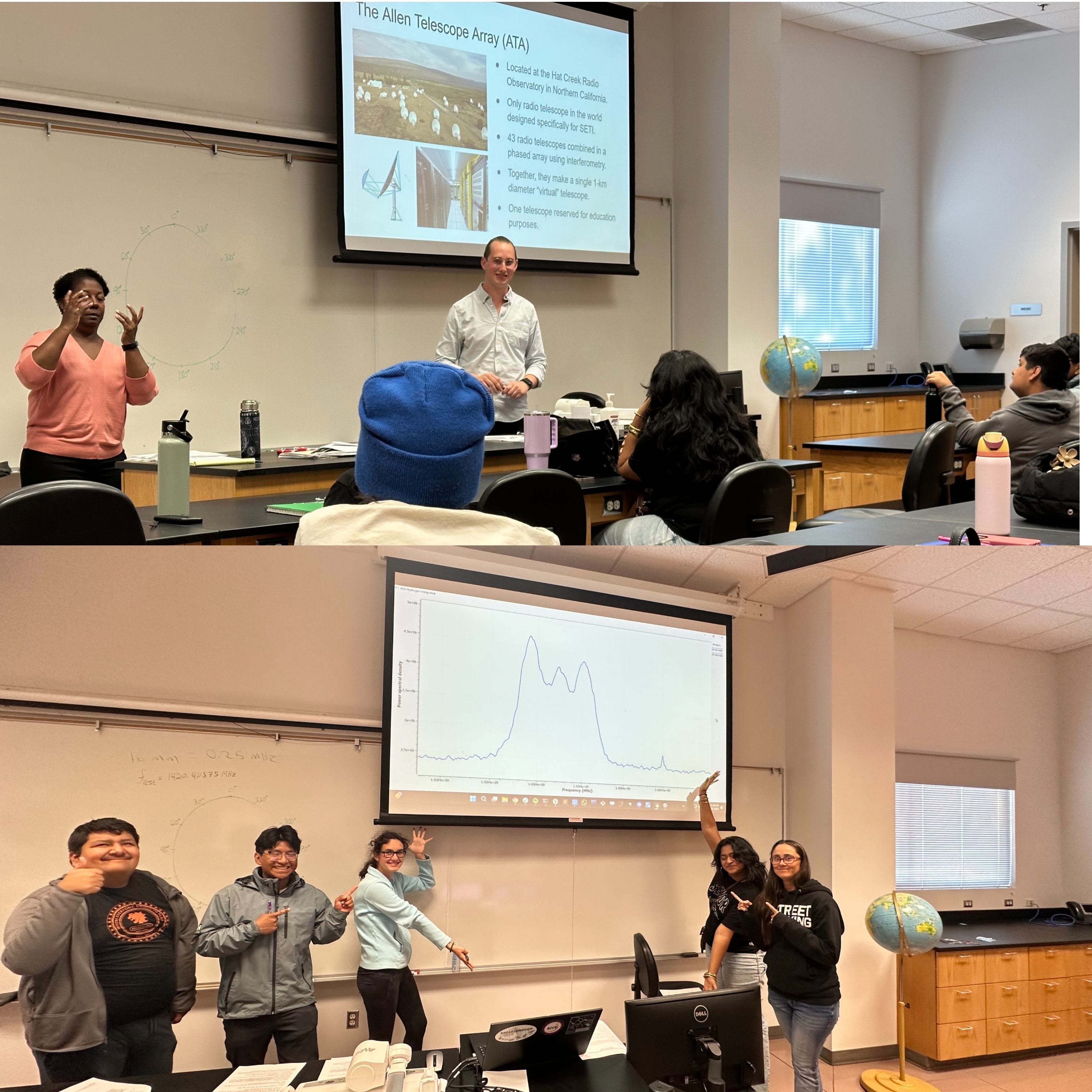
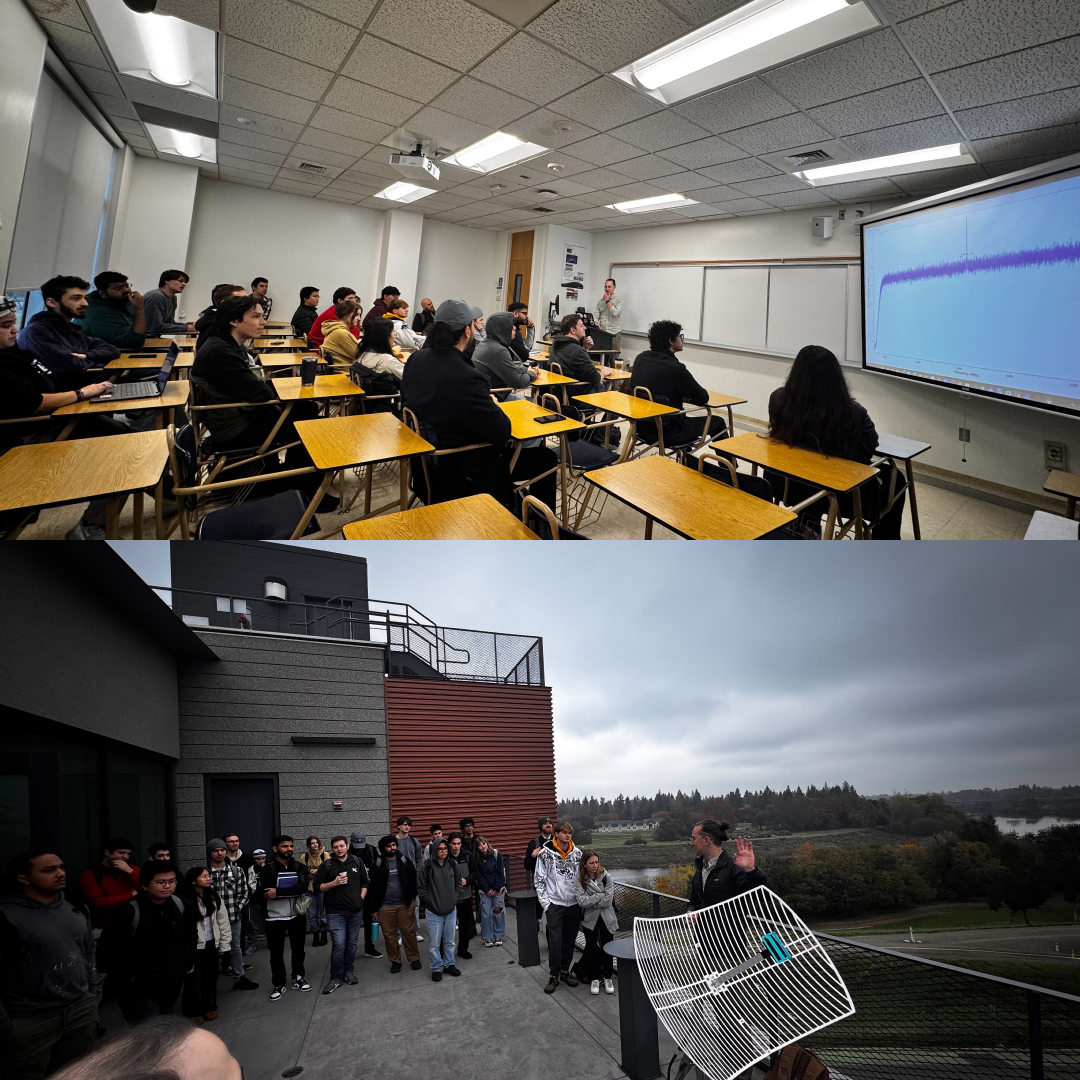
ARISE co-taught ASTR131: Solar System and Space Exploration with Dr. Alexander Pettitt for ~30 students, beginning with a brief introduction to SETI and radio astronomy. The class then ran live demonstrations using the Allen Telescope Array to detect radio signals from the Tianwen-1 spacecraft orbiting Mars (Mars Orbiters and the Search for Technosignatures). We wrapped with a rooftop downlink session using a small radio dish to receive GOES satellite transmissions and connect the resulting data products to “Decoding Earth” as a biosignature-style case study (Decoding Earth: Signals from Geostationary Orbit).
Mobirise Website Builder

California State University Chico

December 2025 (Chico, CA).
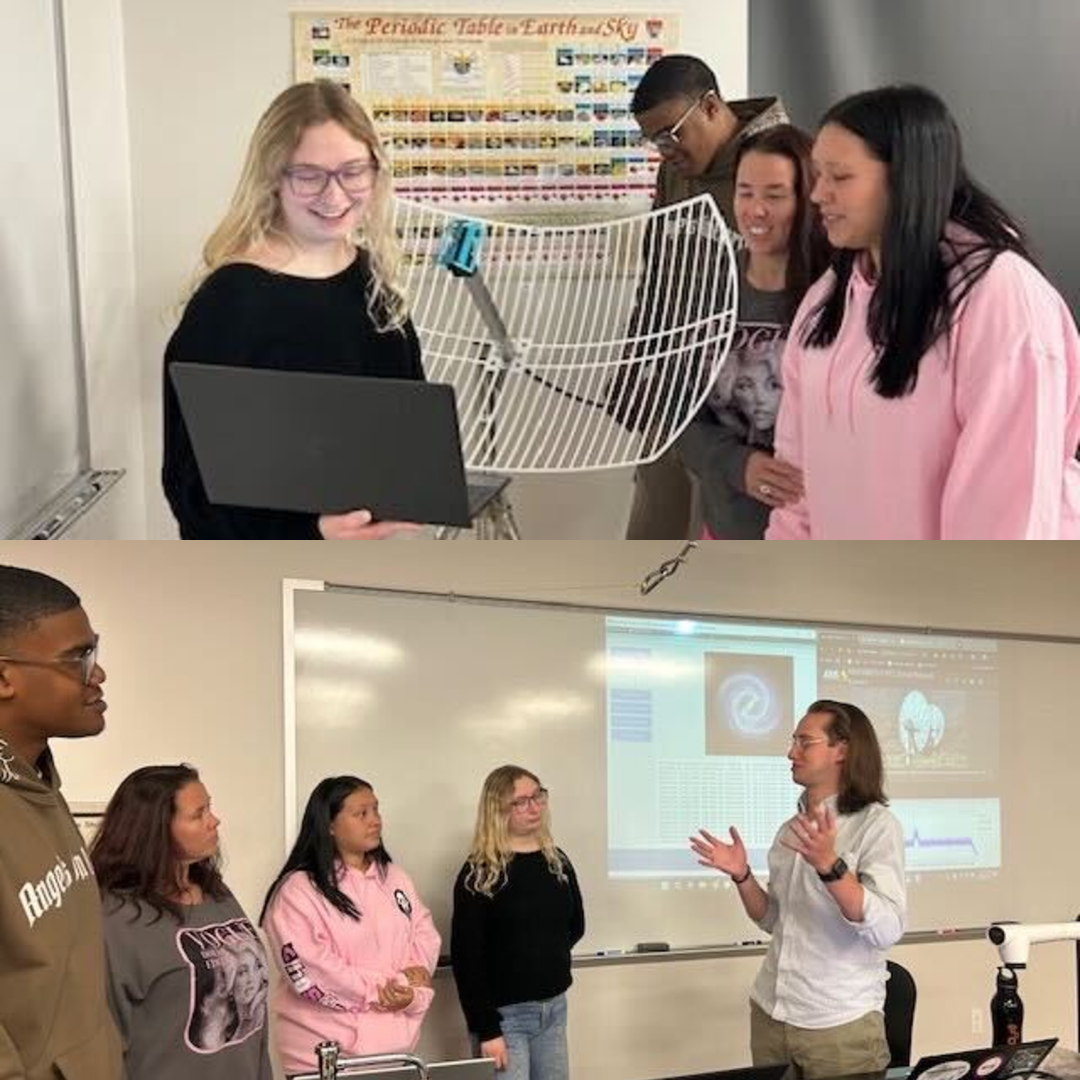
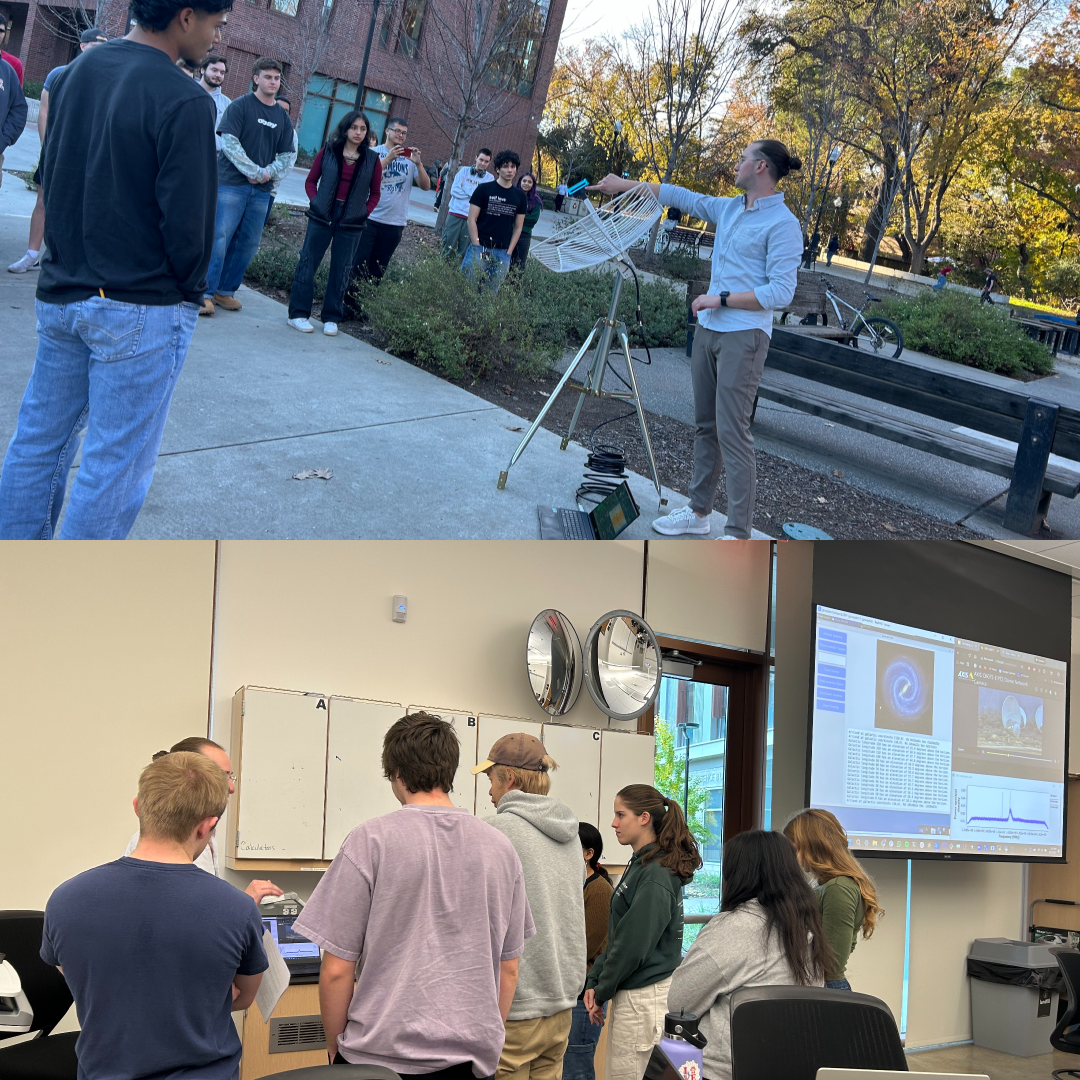
ARISE co-taught two lab sections (~90 students total) with Dr. Mahendra Thapa in General Physics I and II, using radio observations to connect core physics concepts to real datasets. In General Physics I, students completed Decoding Earth: Signals from Geostationary Orbit by downlinking from GOES Satellites with a small dish, decoding real-time Earth images, and comparing additional satellite data to identify biosignature-like impacts of life visible from space. In General Physics II, students ran Mapping the Milky Way in 21cm Hydrogen by remotely operating the Allen Telescope Array to collect 21 cm spectra, measuring Doppler shifts to estimate radial velocities and using those results to reason about spiral structure and galactic rotation.

Mobirise Website Builder

Middlesex Community College

November 2025 (Lowell, MA).
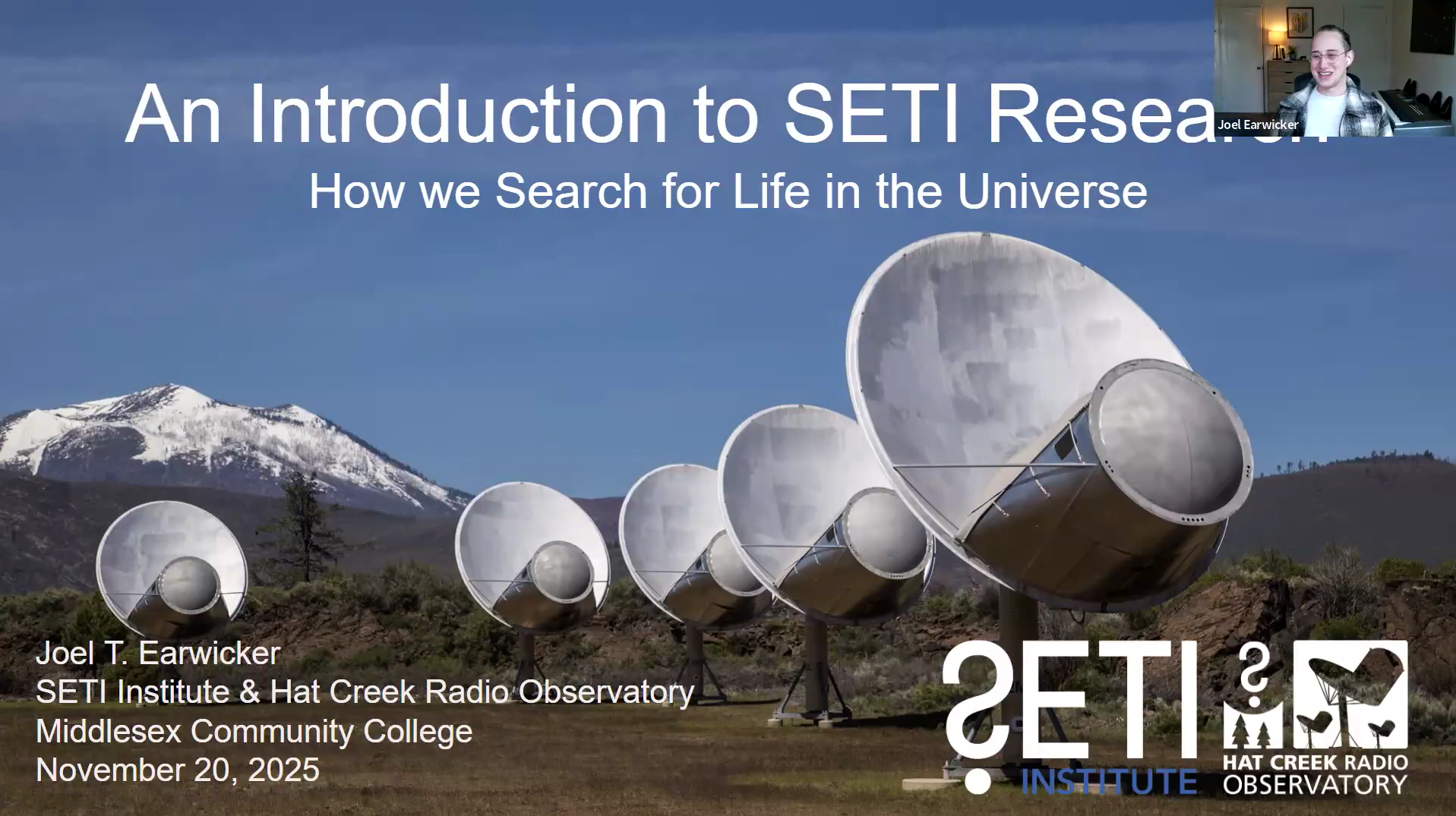
ARISE delivered an online guest talk for Astronomy 101 introducing astrobiology and modern SETI research. The session framed the search for life as a scientific problem with testable ideas, then used the Drake Equation as a structured way to discuss the chain from planets to biology to technology. We also highlighted how radio astronomy fits into SETI, including what kinds of signals we search for and what makes a candidate signal scientifically interesting.

Mobirise Website Builder

Weatherford College

October 2025 (Weatherford, TX).
ARISE co-taught PHYS 1403: Stars and Galaxies with Dr. James Espinosa for ~35 students, running a three-lab sequence that moved from near-Earth satellites to the Milky Way. In Decoding Earth: Signals from Geostationary Orbit, students used a small radio dish to receive a GOES downlink and worked with Earth imagery and related data products as a biosignature-style case study, focusing on ways life changes a planet in detectable ways. In Mars Orbiters and the Search for Technosignatures, students detected and interpreted a spacecraft’s narrowband carrier signal as a real technosignature analog using radio observations (including remote observing with the Allen Telescope Array when applicable). In Mapping the Milky Way in 21cm Hydrogen, students remotely operated the Allen Telescope Array to collect 21 cm spectra, measure Doppler shifts, and use the resulting velocities to reason about galactic rotation and spiral structure.

Mobirise Website Builder

IEEE World Technology Summit

October 2025 (Peoria, IL).
ARISE brought two hands-on labs to the summit to show how real radio signals can be used as case studies for biosignatures and technosignatures. In Decoding Earth: Signals from Geostationary Orbit, participants used a small radio dish to receive a geostationary satellite downlink and worked with Earth imagery and related datasets to explore how a living planet can leave detectable signatures from space. In Mars Orbiters and the Search for Technosignatures, participants detected and analyzed a spacecraft’s narrowband carrier signal as a real technosignature analog, using spectrum tools and radio observations to interpret what they were seeing.

Mobirise Website Builder

Illinois State University

October 2025 (Normal, IL).
ARISE ran a student-focused workshop in partnership with IEEE, centered on two hands-on labs that use real radio signals as case studies for biosignatures and technosignatures. In Decoding Earth: Signals from Geostationary Orbit, students used a small radio dish to receive a geostationary satellite downlink and worked with Earth imagery and related datasets to explore how a living planet can produce detectable signatures from space. In Mars Orbiters and the Search for Technosignatures, students detected and analyzed a spacecraft’s narrowband carrier signal as a real technosignature analog, using spectrum tools and radio observations to interpret what they were seeing.

Mobirise Website Builder

University of Illinois Urbana-Champaign

October 2025 (Champaign, IL).
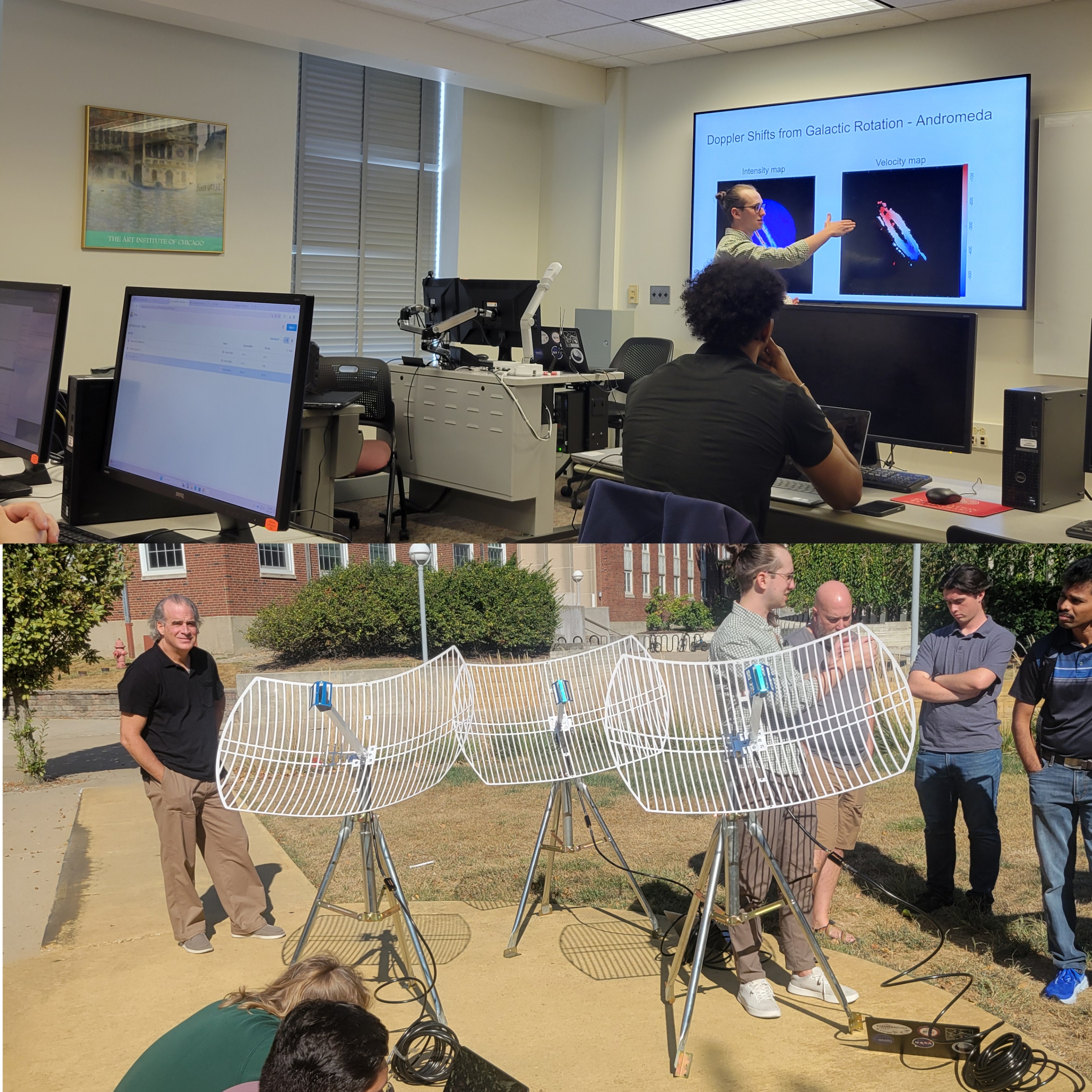
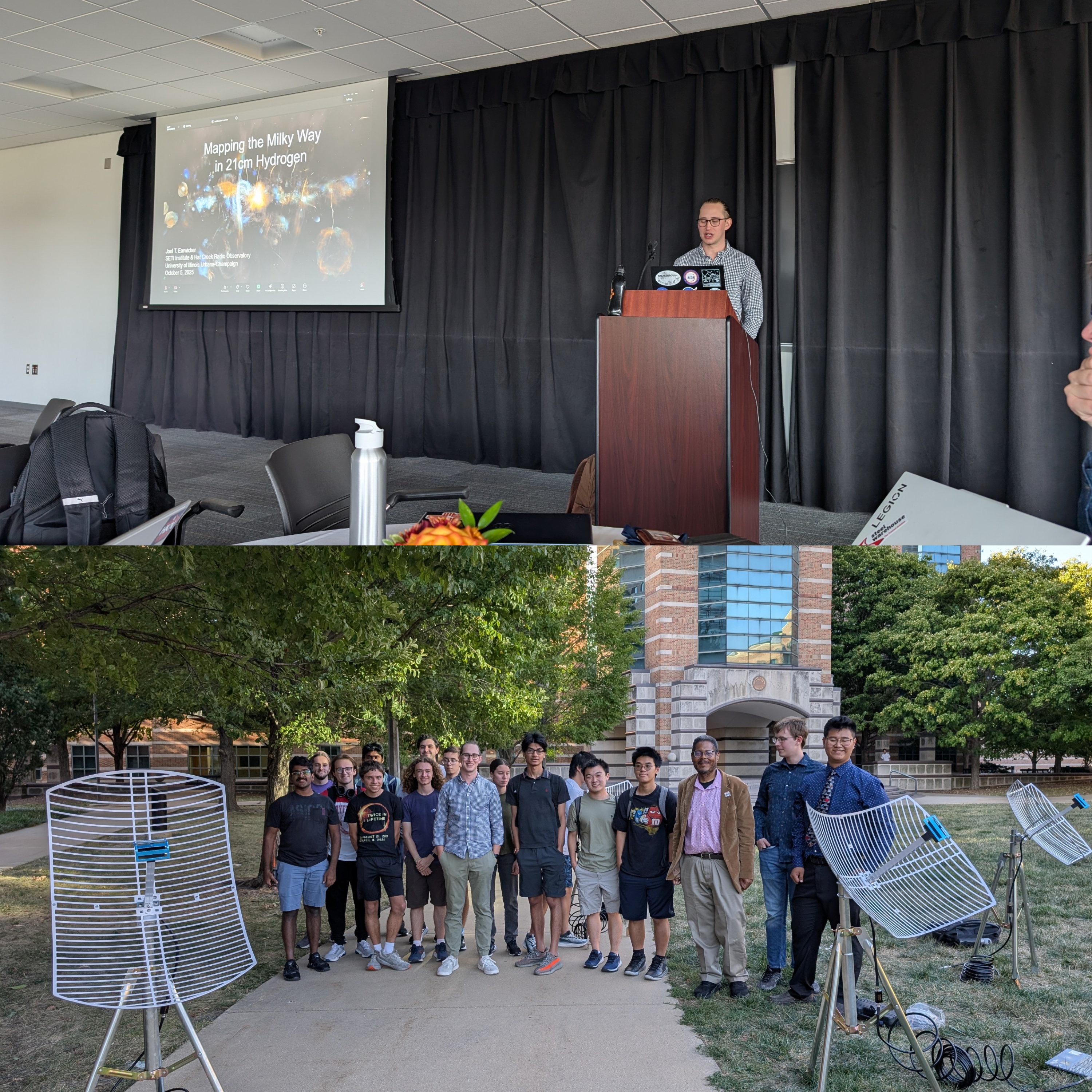
ARISE hosted a student workshop in partnership with IEEE, running three labs that tie signal detection to biosignatures, technosignatures, and the structure of our galaxy. In Decoding Earth: Signals from Geostationary Orbit, students used a small radio dish to receive a geostationary satellite downlink and worked with Earth imagery and related datasets to explore how a living planet can leave detectable signatures from space. In Mars Orbiters and the Search for Technosignatures, students used remote observations with the Allen Telescope Array to detect and analyze a spacecraft’s narrowband carrier as a real technosignature analog. In 21cm Hydrogen in the Milky Way, students also used remote ATA observations to collect 21 cm spectra, measure Doppler shifts, and connect velocity structure to galactic rotation and large-scale structure.

Mobirise Website Builder

Young Harris College

September 2025 (Young Harris, GA).
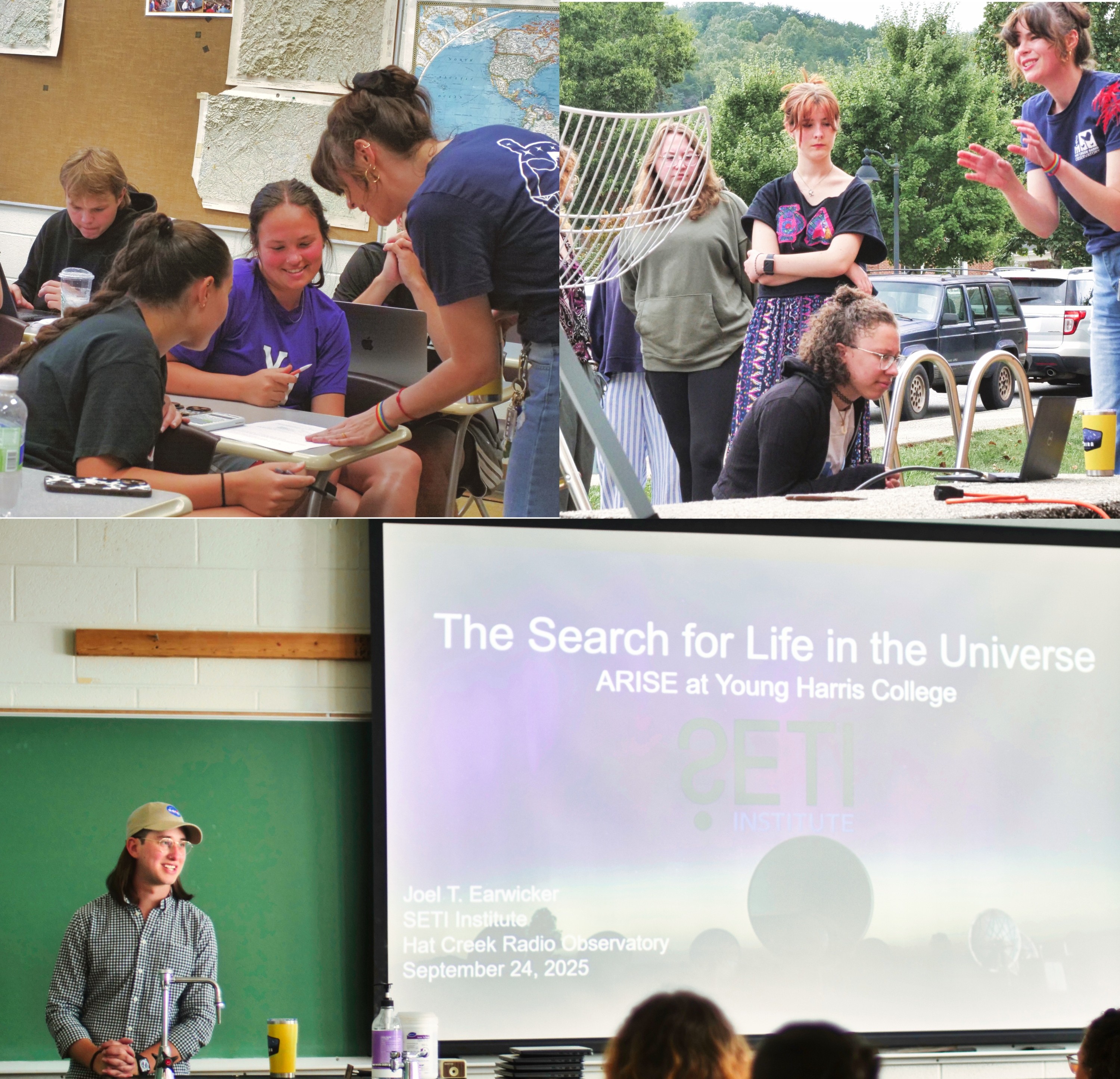
ARISE co-taught ASTR 1106: Beyond the Solar System with Director of the O. Wayne Rollins Planetarium, Lauren Albin, using three hands-on labs to connect exoplanets, life detection, and SETI to real radio signals and observations. In Decoding Earth: Signals from Geostationary Orbit, students used a small radio dish to receive a geostationary satellite downlink and worked with Earth imagery and related datasets as a biosignature-style case study, focusing on how life can shape a planet in detectable ways. In Mars Orbiters and the Search for Technosignatures, students detected and interpreted a spacecraft’s narrowband carrier signal as a real technosignature analog using radio observations and spectrum analysis. In 21cm Hydrogen in the Milky Way, students explored the 21 cm spectral line to map hydrogen in our galaxy, using Doppler shifts in the line to connect measured velocities to galactic rotation and large-scale structure.

Mobirise Website Builder

SETI Institute REU

July 2025 (Hat Creek Radio Observatory).
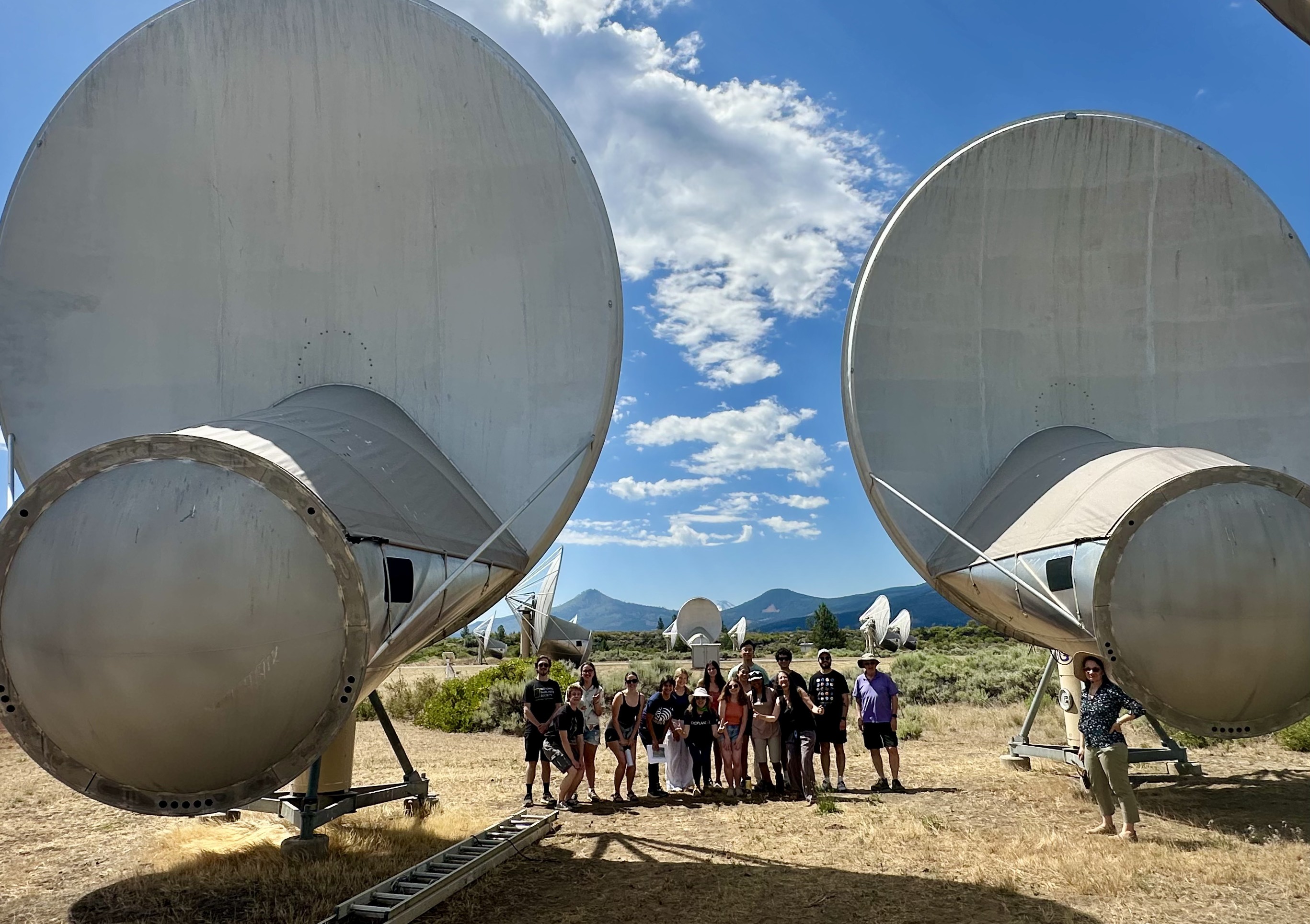
ARISE ran a set of hands-on labs for REU students that used real observing and practical RF skills to connect radio astronomy to signal detection in the field. In 21cm Hydrogen in the Milky Way, students collected and analyzed 21 cm hydrogen spectra and used Doppler shifts to connect measured velocities to Milky Way rotation and large-scale structure. In Pulsars, students worked with pulsar time-series data to identify periodic signals and relate the measured period to basic neutron star physics. In the SDR Foxhunt, students used handheld SDR receivers and directional techniques to track down a hidden transmitter, building intuition for antennas, propagation, interference, and how hard it can be to localize a signal in the real world.

Mobirise Website Builder

Palomar College

April 2025 (San Marcos, CA).
ARISE co-taught ASTR 105L: Principles of Astronomy Laboratory with Dr. Scott Kardel, focusing on Mapping the Milky Way in 21cm Hydrogen. Students remotely operated the Allen Telescope Array to collect spectra of the 21 cm hydrogen line from different directions in the sky. They used Doppler shifts in the line to estimate radial velocities and then connected those measurements to the Milky Way’s rotation and spiral structure.

                                                     With Support from Amateur Radio Digital Communications

HTML Builder